Storage Units and Equipment Rentals: Are They Worth the Investment?
Nov 02, 2026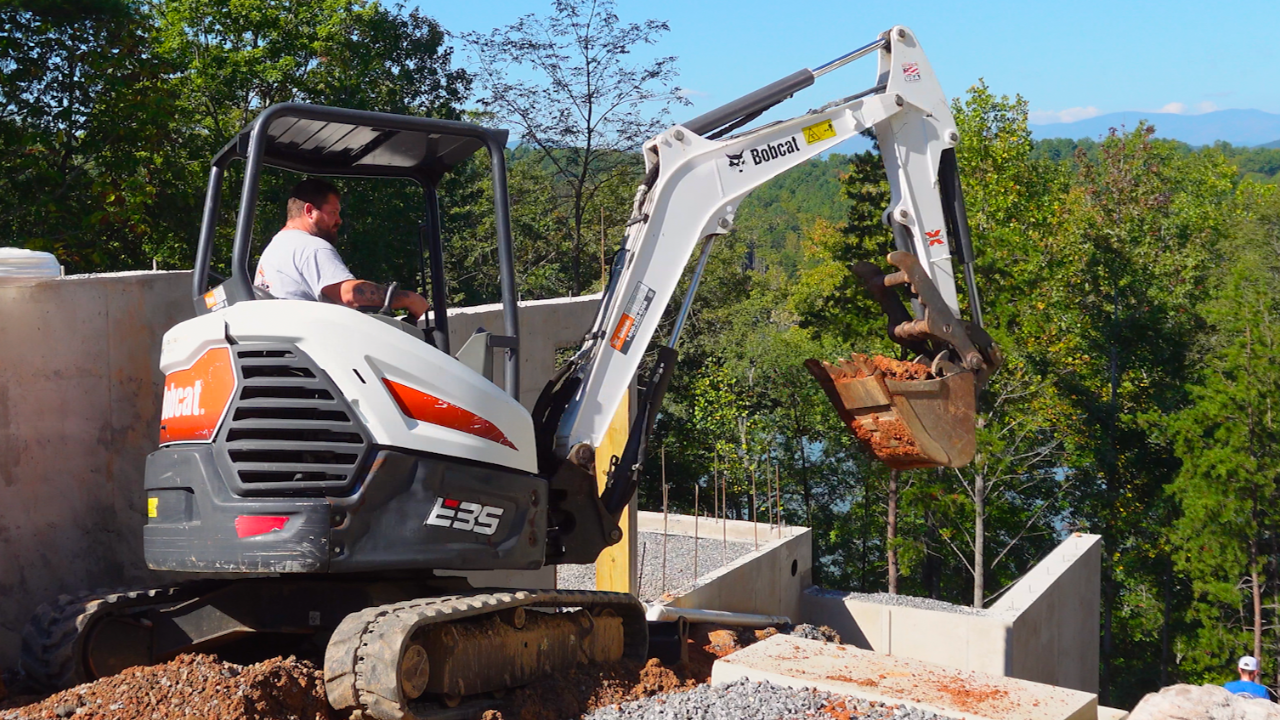
Storage facilities, equipment rentals, and even unused attachments can create additional income for blue collar business owners. But before investing, you need to understand the demand, expenses, and responsibilities that come with them.
If you've been running a blue collar business for a while, there's a good chance you've thought about finding ways to make money outside of your everyday operations. Maybe you've got equipment sitting in the yard that isn't being used. Maybe you've considered buying some land and building storage units. Or maybe you've noticed how many RV and boat storage facilities are popping up around your area and wondered how much money those properties are making. These are all opportunities worth looking into, but there's something I want business owners to understand before jumping into any of them.
Just because an investment generates recurring income doesn't mean it's passive.
This past week inside Dirt to Dollars, we continued our Building Wealth Through Ownership series by talking about storage facilities and equipment rentals. We covered the different types of storage investments, buying versus building, renting equipment you already own, and some of the risks that can make these investments more trouble than they're worth.
We also got into real examples from other blue collar business owners who are already making money renting out trailers, equipment attachments, and other assets.
Not All Passive Income Is Actually Passive
One thing I want to clarify is that there are different levels of passive income. There's income that requires you to show up and work every day, which is really just another job. Then there's semi-passive income, where you might have someone managing the day-to-day operations, but you're still responsible for certain decisions and problems. And then there's truly passive investing, where your money is invested and you're not personally managing the asset.
Most of my real estate investments fall into that middle category. I might have to answer a phone call, make a decision, or deal with something occasionally, but I'm not spending every day managing those properties. That's the type of investment I'm generally looking for.
Storage units and equipment rentals can fit into that category, but they can also turn into a full-time business depending on how they're operated. A storage facility might have automated payments and gate access, but somebody still has to maintain the property, handle tenants who stop paying, and deal with problems when they come up. An equipment rental business might generate money from machines that would otherwise sit unused, but now you're responsible for contracts, maintenance, customer damage, and making sure those machines are available when you need them. Before getting involved, you need to decide how much time you're actually willing to put into the investment.
Different Types of Storage Investments
When most people think about storage facilities, they picture rows of traditional self-storage units. But there are several different types of storage properties worth considering, and they don't all require the same amount of infrastructure or management.
Traditional Self-Storage Units
These are the familiar 10-by-10 units and other enclosed spaces people rent to store their belongings. With modern software, you can automate much of the rental process, including payments, access codes, and customer communication. That makes traditional self-storage an attractive investment, especially when there's strong demand in the area. But you're still responsible for maintaining the buildings and grounds. Roofs leak, gates malfunction, tenants put locks on the wrong units, and people occasionally stop paying and abandon their belongings. Those situations require time and proper procedures to resolve.
Climate-Controlled Storage
Climate-controlled facilities provide heated and cooled spaces for belongings that need additional protection. They can command higher rental rates, but they also come with more infrastructure and operating expenses. You're now responsible for heating and cooling systems, building maintenance, and the additional costs associated with keeping those spaces climate-controlled. Higher rental rates don't necessarily mean higher profits if your expenses increase along with them.
RV and Boat Storage
This is one of my favorite types of storage investments. Instead of constructing an entire building, you can potentially provide a fenced, well-lit area where customers park their boats, campers, and other recreational vehicles. In some cases, you're essentially renting a parking space on a piece of land. You can automate payments and gate access, which helps reduce the amount of time you spend managing the property. We're even considering adding RV storage at our campground for people who want to leave their campers there without paying for a full hookup site.
Contractor Storage, Flex Bays, and Equipment Yards
There are also opportunities to rent larger spaces to other businesses. Contractor storage might consist of individual garage bays where someone can store tools, materials, or equipment. Flex bays are spaces that can accommodate different types of businesses and uses. Equipment yards can be even simpler, depending on what customers need. A business might just want a secure location to park trucks, trailers, or machinery. I have experience with flex bays, and they've worked well for me. But that doesn't mean every type of storage would work in my area.
The Best Storage Investment Depends on Your Market
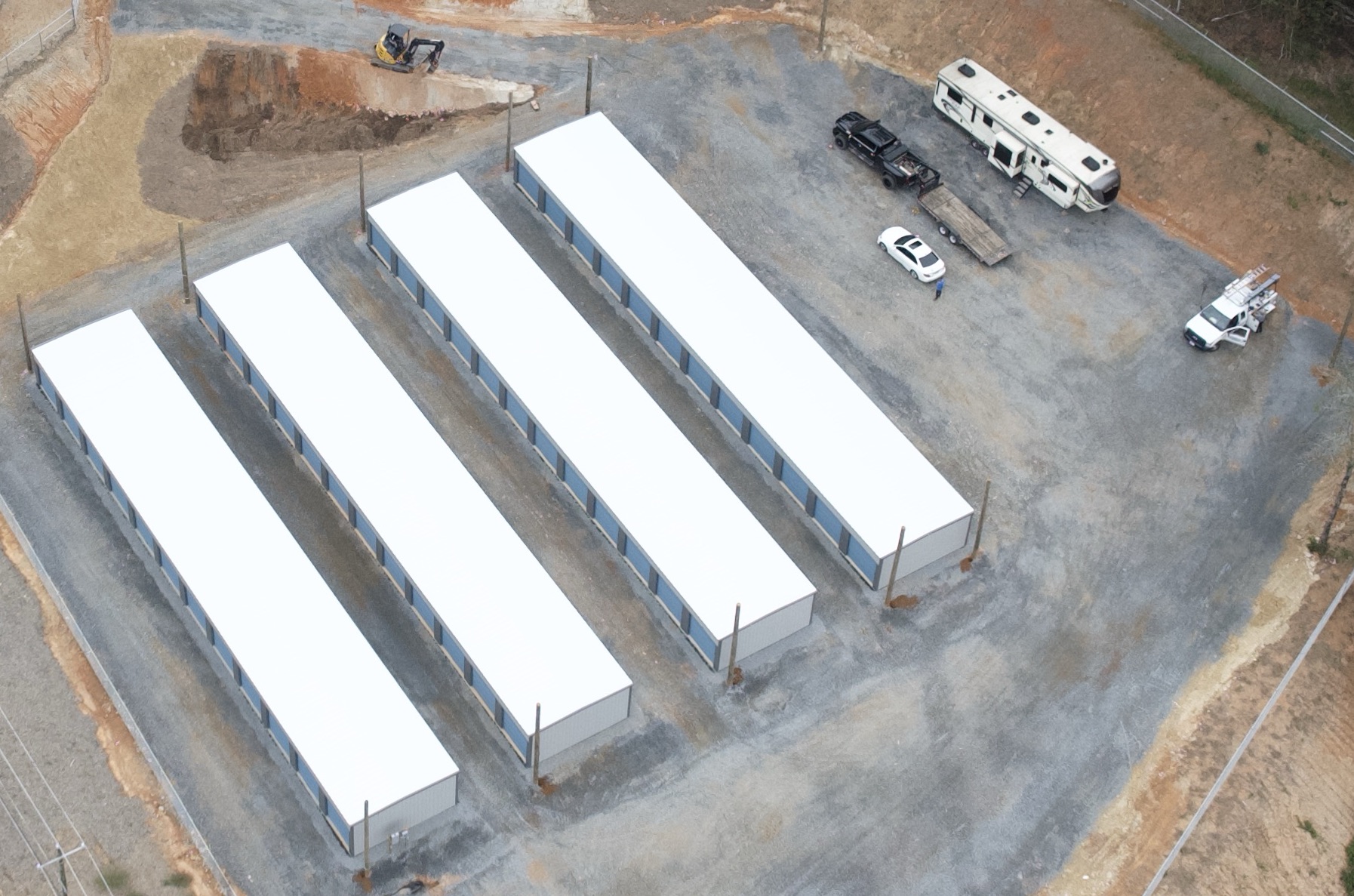
One of the biggest things I stressed during the call was understanding the demand in your specific area. Where I'm located, traditional self-storage seems to have tremendous demand. Facilities keep getting built, and people continue renting units. RV and boat storage also makes sense because we're close to Lake James. There are plenty of people who own boats and campers but don't have room to park them at home. I've seen outdoor storage facilities fill up in just a few months. Some of those properties are charging around $80 per month for a 10-by-40 parking space. Ten rented spaces at that rate would generate $800 per month in gross rental income.
That might not sound like a fortune, but when you start considering how many spaces can fit on a property, you can see why the numbers are worth investigating. On the other hand, I don't think certain types of contractor storage or equipment yards would perform as well here. A lot of people in our area already have farms, barns, or other places to store their equipment. There's simply not the same need for those rental spaces.
You can't assume something will be a good investment in your market just because it's making money somewhere else. Look at what people are already renting, what they're paying, and whether there's enough demand to support another facility.
We also revisited the 1% rule as a quick screening tool. For example, if you're considering a $150,000 property, you'd initially look for around $1,500 in monthly rental income. That's not a complete investment analysis, and it doesn't account for all your operating expenses, but it gives you a starting point when comparing opportunities.
Buying Storage Units vs. Building Your Own
Another question worth considering is whether you're better off purchasing an existing storage facility or developing one yourself. I've built several storage facilities for customers, although I haven't built a traditional self-storage facility for myself. There can be a significant difference between what it costs to develop a property and what the completed property is worth.
I shared an example during the call of a storage facility we built for a customer. By the time the project was completed and the owner went back to the bank to refinance, the property had approximately $1 million in equity based on the financing and valuation involved. That doesn't mean every storage development will create that kind of equity. But it shows why building can be an attractive option if you understand the costs and have the resources to complete the project.
The tradeoff is that developing a facility requires time. You have to find the land, work through the development process, install infrastructure, construct the buildings, and get everything ready for customers. Some business owners would rather purchase an existing facility that's already generating income. Others may have the equipment, employees, and experience to develop a property themselves at a lower cost. Neither option is automatically better. You have to evaluate the numbers, the demand, and how much involvement you want.
Can You Make Money Renting Equipment You Already Own?
The second half of our investment discussion focused on equipment rentals. This is something I've considered many times over the years, but I've never operated a dedicated heavy-equipment rental business myself. I did learn a lot from a good friend of mine, Kevin, who owned three equipment rental locations. And I've spent plenty of time thinking about whether renting out our unused equipment would make sense.
As blue collar business owners, we know how expensive equipment is. Even when a machine is paid off, it still costs money to own. It depreciates, components deteriorate, and maintenance doesn't disappear just because the machine isn't being used. At one point, our bulldozer would sit for three or four months before we needed it again. During that time, I could have potentially rented it for around $500 per day. That's money we weren't collecting. But there was a reason I chose not to rent it.
Our business has always put a lot of emphasis on being able to respond quickly when customers need something. If that bulldozer was rented out when a profitable job came in, we might have to delay the work or turn it down entirely. And that opportunity could be worth significantly more than the rental income. You have to consider what renting out a machine might cost your primary business, not just what the rental could earn. If you make $5,000 renting a piece of equipment but lose $10,000 in productivity or other opportunities because it isn't available, you haven't come out ahead.
Equipment Rentals Need More Than a Handshake
One of the biggest concerns I've always had about equipment rentals is what happens when customers damage your machines. During the call, I shared a story about a brand-new excavator my friend Kevin had purchased. A customer rented it during Hurricane Helene cleanup and didn't even make it a mile down the road before hitting a bridge with the boom. The machine was severely damaged, I couldn't understand how Kevin was so calm. But he had the proper rental agreement, insurance, and payment information in place to handle the situation. That experience changed how I looked at the equipment rental business. The problem isn't necessarily that customers might damage your equipment, that's a risk you have to anticipate. The problem is renting out equipment without having systems in place to protect yourself.
If you're going to rent machinery, you need to think through things like:
-
Written rental agreements that clearly establish responsibilities.
-
Appropriate insurance coverage.
-
Payment methods and procedures for collecting damage charges.
-
Documented equipment inspections before and after rentals.
-
Photos showing the machine's condition.
-
A process for tracking rentals, returns, maintenance, and repairs.
-
Whether a separate business entity makes sense for the operation.
The exact insurance, contract, and business structure requirements should be reviewed with qualified professionals. I wouldn't recommend casually handing somebody a mini excavator for a few hundred dollars in cash and hoping it comes back in one piece. If something goes wrong, that rental income can disappear pretty quickly.
The Equipment Rental Opportunities We Almost Overlooked
A member who operates a landscape supply yard shared that he purchased a dump trailer to rent out. Someone rented it during the first month and ended up keeping it for 12 months straight. He eventually had to purchase another trailer because his own business needed one.
Another member talked about renting skid steer attachments, including grapples, land levelers, and snow equipment. Some of those attachments were bringing in $100 to $200 per day, depending on what was being rented. That conversation got me thinking about how many attachments we have sitting around our own yard. We've got buckets, brush cutters, and other attachments that rarely get used. Some of them are relatively simple pieces of steel without a lot of moving parts, making them potentially easier to maintain than an entire machine. I hadn't seriously considered renting those attachments before the call. But hearing how other members were making money with theirs made me realize we might be overlooking an opportunity. I even talked about moving some of our unused attachments to Rhinehart's Saw & Lawn so we could offer them for rent through an operation that already has a location, payment systems, and mechanical support.
That's one of the things I love about these calls. Sometimes another business owner brings up something they're doing that makes you look at your own operation differently.
Why Having the Right Setup Makes Equipment Rentals Easier
One of our members also shared some of the challenges he's experienced renting equipment. He had a concrete buggy available for rent, but it seemed like every time he needed it for his own business, something was wrong with it. Maybe someone put bad fuel in it, or it needed repairs. Now he was spending time fixing a machine that was only renting for around $190 per day. That's something you need to think about before getting involved.
Who is going to maintain the equipment? Do you have a mechanic available, or are you going to pull one of your productive employees off a job to fix a rental machine?
At Rhinehart's, we already have some of the infrastructure needed to make equipment rentals work. We have a storefront, a way to process payments, rental agreements, and mechanical support. We also started renting out a mower this year. The mower cost approximately $9,200, and we rent it for $95 per day. It has already earned back roughly a third of its purchase price in rental revenue during the season.
That doesn't account for every operating expense, but it gives you an idea of how a relatively small rental asset can generate additional income. Having the right systems already in place makes it much easier to consider adding more rental equipment. If you don't have those systems, you need to factor in what it will cost to establish them.
Don't Turn an Investment Into Another Problem to Manage
Whether you're considering storage units, RV parking, contractor bays, dump trailers, or heavy-equipment rentals, the same principle applies. You need to understand what you're getting into before spending the money. Storage facilities can generate recurring income, but they're still physical properties that require maintenance and management.
Equipment rentals can help you make money from machines and attachments that aren't being used, but they come with liability, repairs, and the possibility of interfering with your existing work. And just because an investment is working for another business owner doesn't mean it'll work the same way for you. I like investments that can generate income without requiring me to manage another company every day. That's why I'm particularly interested in simple land-based storage, automated rental systems, and opportunities where we can use infrastructure we already have.
The best investment isn't necessarily the one that generates the most revenue. It's the one that makes financial sense after you account for the money, time, and responsibility it requires. Before buying a property or putting equipment up for rent, look at the actual demand, understand your costs, and make sure the investment supports what you're already building. You worked hard to get your business to where it is. Don't let your next investment become something that takes your attention away from it.
Next Week on Dirt to Dollars: Buying Existing Businesses
We're continuing our Building Wealth Through Ownership series with a discussion about buying existing businesses. We'll get into what to look for when evaluating a business, how to determine whether it's worth buying, and the things you need to consider before taking over someone else's operation. Join us Thursday at 7 PM ET for the live Dirt to Dollars Operator call!