Stop Guessing What the Job Should Cost
Sep 14, 2026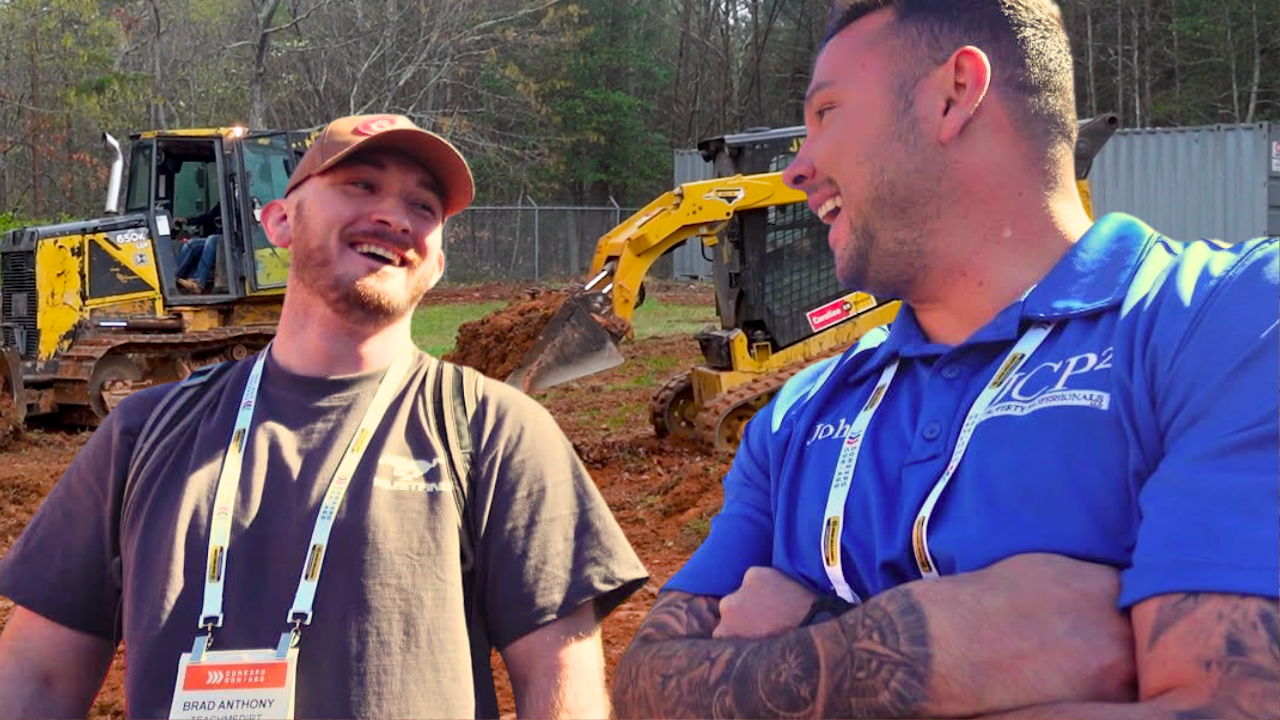
A lot of contractors eventually reach a point where experience gives them a pretty good feel for a job. You walk the site, look at the plans, think through the equipment and labor, and a number starts forming in your head. Maybe you know what similar contractors charge. Maybe you know what you got for the last clearing job. Maybe you have an hourly rate for each machine that has worked well in the past. Experience matters, but there is a big difference between knowing what a job feels like it should cost and knowing what it will actually cost your company to complete it.
Last week inside Dirt to Dollars, we brought in Brad Anthony, Founder of Excavation Estimation and @teachmedirt, for a guest call centered around estimating, production, change orders, cash flow, and the numbers contractors need to understand before taking on bigger work. The conversation ranged from residential jobs to heavy civil projects, but much of the advice came back to the same principle: your estimate has to be built around the reality of your own business, not simply what somebody else charges.
Know Your Floor Before You Decide on the Price
One of the most common questions in the trades is some version of, What should I charge for this?
What should I charge per hour for my excavator? What should I charge for clearing? What should I get per foot of pipe? What is everybody else getting for this size machine?
Those numbers can give you a reference point, but they can't tell you whether your company will make money at that price. Your equipment payments, labor burden, overhead, mobilization, supervision, maintenance, project management, material costs, insurance, and dozens of other expenses aren't necessarily the same as the contractor down the road.
Brad summed up the starting point simply:
“If you know what your costs are, you know what your floor is.”
That floor matters because it tells you how much room you actually have in the job. Instead of adding a huge cushion because you're worried you missed something, or cutting the number because you really want the work, you have something concrete to work from.
Even if your estimating process is still pencil and paper, Brad's point was that knowing your costs is nonnegotiable. As he put it later in the call, “If you don't know what your floor is, you can never tell what your ceiling is.”
Your Best Day Is Probably a Bad Production Rate
Knowing your costs still doesn't help much if the amount of time you give yourself to complete the work is wrong. The number one estimating mistake Brad said he sees contractors make is overestimating their production rates.
Maybe your crew laid 550 feet of pipe on a great day, so the next estimate gets built around 550 feet per day. The problem is that the last pipe may have been four feet deep while the next run is 15 feet deep. The soil conditions could be different. Winter weather could slow you down. Traffic control could affect production. Equipment can go down. Your employees may not produce at the same pace you personally would. That one great production day isn't necessarily your production rate.
Brad's approach is to compare estimates against actual field production and adjust for the conditions of the next project. If an average production rate is 225 feet per day, for example, he may estimate closer to 190 or 200 when heading into winter so there is room for weather and delays.
The same thinking applies whether you're laying miles of pipe or doing smaller residential work. Your estimate needs to reflect what the project is realistically going to take, not what you know is possible when everything goes perfectly.
The Small Things You Miss Can Be the Things That Kill the Job
A machine rate or labor number is only one piece of an estimate. The plans can contain conditions that completely change how the work has to be performed. Brad talked about contractors missing addendums, material conversions, traffic control, utility depths, trench protection, general conditions, and other requirements that aren't obvious if you're only measuring quantities and putting prices beside them.
A sewer line that appears straightforward can look completely different when part of it is 18 feet deep. Now you may be dealing with trench boxes, shoring, additional equipment, space limitations, and slower production.
Equipment costs create the same problem. Contractors may budget for routine maintenance without budgeting for the eventual replacement of the machine. The estimate looks profitable because a real cost of owning and operating the equipment never made it into the calculation.
Being thorough isn't about making an estimate unnecessarily complicated. It's about understanding enough of the project to know where your money can disappear before you ever sign the contract.
Protect the Scope Before the Work Starts
Even a great estimate can turn into a bad job when nobody clearly defines what is included. Brad is extremely detailed with exclusions and clarifications because they establish exactly what his number covers. On larger projects, quantities matter too. If your proposal says you included 400 feet of sewer and the project later requires another 600 feet, having that original quantity documented gives you something concrete to point back to.
The same principle applies on a residential job when you uncover rock, unsuitable soil, or the customer asks for additional work. The worst time to decide how extra work will be handled is after you've already done it.
Brad recommended thinking through likely changes ahead of time and, where appropriate, establishing unit rates before work begins. If everyone already understands how rock removal or another predictable unknown will be priced, the crew can document what happened and keep the project moving instead of starting a pricing argument in the middle of production.
There were years when multiple crews at JC Property Professionals could perform work outside the original scope simply because they were trying to keep a project moving. By the time I found out what happened, sometimes weeks later, the additional work had already been performed without the documentation needed to properly bill for it. Today, crews submit progress photos and trackers showing what they did, machine hours, material movement, and other production information so changes are much harder to miss.
Brad takes a similarly documentation-heavy approach. Foremen track who and what equipment were on the project, materials delivered, and quantities installed. That information isn't paperwork for the sake of paperwork. It tells the office whether the job is following the estimate.
Stop Saying “We'll Figure It Out at the End”
Change orders deserve paperwork! I had a recent situation where the “we'll figure it out when we're done” approach contributed to a roughly $55,000 problem. Brad's process prevents that so when a change occurs, document it, agree to the terms, and get signatures before allowing uncertainty to pile up.
This becomes even more important as you grow. When you're personally standing on every project, you may know immediately that the crew hit rock or the customer changed the scope. When you have five crews working without you, the business needs a way to recognize, document, communicate, and bill those changes without relying on you being there.
Every Completed Job Should Make Your Next Estimate Better
One of the most valuable parts of estimating happens after the job is already finished. Brad talked about using historical data to continually compare what was estimated against what actually happened. His clients send production information, timesheets, actual costs, and other field data so those numbers can be compared against the original estimate.
JCP now expenses every job, whether it's a $500 project or a $300,000 project. They look at the money going in and out, where they made money, where they lost it, and why. For years, we didn't. A job would finish and the conclusion might simply be, I don't feel like we made much money on that one.
But that doesn't tell you anything useful for the next estimate. Did the machine break? Was the production assumption wrong? Did you miss material? Were you short an employee for three days? Did the scope change? Without the data, you're guessing again on the next job.
Brad shared an example of a client he's worked with for three years. With three years of company data to work from, he said their estimates can now get within about a 2% error margin of actual results. You don't build that accuracy from a pricing book. You build it by learning your own company!
Cash Flow Has to Be Part of the Estimate Too
A profitable job can still put you in a terrible financial position if the timing of the money doesn't work. Brad tracks available cash alongside accounts payable, accounts receivable, payroll, invoice terms, and upcoming payments. In heavy civil work, where a contractor may purchase hundreds of thousands of dollars in materials before receiving a progress payment, payment terms can determine whether the company can comfortably carry the project.
Bringing that back to smaller residential contractors, you can have multiple profitable projects underway and still put yourself in a hole if deposits, progress payments, payroll, materials, and final collections aren't structured properly. More work doesn't automatically create more cash.
Before taking on the next large project, you need to understand not only how much you expect to make, but when money goes out, when money comes back in, and whether the company can carry the gap.
Bigger Work Requires Better Numbers
There is nothing wrong with estimating from experience. Brad even talked about contractors who can look at a project and come remarkably close to the final number because they've performed that type of work so many times. The problem comes when experience turns into guessing.
As the jobs get larger, small mistakes become expensive mistakes. A production rate that's slightly too aggressive, a cost you forgot to include, an undocumented scope change, or a payment schedule that doesn't match your cash needs can erase the profit you thought was built into the project.
The answer isn't necessarily to make every estimate more complicated. It's to get better at understanding your costs, your production, your scope, and your actual results. And the more jobs you complete, the more information you should have to make the next bid better.
The full guest call with Brad Anthony of Excavation Estimation (@teachmedirt) is available now inside Dirt to Dollars! Next week, on the Operator call we’re getting into "Becoming the Owner". Owning the company means eventually stepping out of the day to day long enough to actually lead it. We’ll talk about where your time and attention should go, what you need to let go of, and what only you can own as the business grows.