Buying Commercial Property for Your Business: How to Know If It's Worth It
Oct 20, 2026
From equipment yards and shops to office buildings and rental spaces, commercial real estate can help contractors grow their businesses and create additional income. But knowing when and what to buy makes all the difference.
At some point, almost every growing contracting business runs into the same problem where you're running out of space. Equipment is parked wherever you can fit it, materials are piling up, and you're starting to wonder whether it's time to get your own shop, office, or commercial yard.
Buying property might seem like the obvious next step, but owning commercial real estate isn't automatically better than renting. The wrong property can tie up your cash, limit your growth, and become another expense your business has to support.
Last week inside Dirt to Dollars, we continued our Building Wealth Through Ownership series with a discussion about commercial real estate. We covered when it makes sense to buy property for your business, how to evaluate potential deals, and how contractors can use commercial properties to generate income beyond their day-to-day operations. We also walked through a real property that one of our coaching members was considering purchasing, breaking down the numbers, potential renovations, and opportunities to make the investment work.
The biggest takeaway was this: Don't buy commercial property just because you can afford it. Buy it because it makes financial sense and helps you accomplish something.
Should You Rent or Buy Commercial Property?
There's a point in business when having your own commercial property starts to sound appealing. Maybe you're tired of operating out of your backyard, paying rent to someone else, or trying to find somewhere to park another piece of equipment. But before you start looking at properties, you need to understand what you're actually trying to accomplish.
If you're relatively new in business, cash flow is tight, or you haven't established a consistent customer base in your area, buying property could create more problems than it solves. On the other hand, if your business is established and a commercial location would improve your operations, increase visibility, or create opportunities for additional revenue, purchasing might be worth considering.
Location is a major factor. A cheap building in the middle of nowhere isn't necessarily a good investment if it adds unnecessary travel time and does nothing to help your business. The right location could mean having road frontage where potential customers see your equipment and signage every day. It might mean being closer to your typical job sites or having a yard where you can store and sell materials.
You also need to consider what the property is legally allowed to be used for. Just because a piece of land is zoned commercial doesn't mean you can automatically operate a dirt pit, sell mulch, store equipment, or build additional rental units.
Buying property should solve a problem or create an opportunity for your business. If it doesn't do either, renting may be the smarter decision.
Buy for the Business You're Building, Not Just the Business You Have Today
One of the challenges of buying commercial real estate is knowing how much space you'll actually need. I have purchased several commercial properties for JC Property Professionals over the years, and the business eventually outgrew every one of them. At one point, the company moved into a roughly 4,000-square-foot building that seemed enormous compared to working out of my home property. But as the business grew, there wasn't enough room to park equipment, store materials, and manage daily operations. The company eventually moved to a larger location with additional yard space and rental opportunities. Even that property is beginning to fill up as the business continues expanding.
That's why it's important to think beyond what you need right now. Will the property still work for your business three, five, or ten years down the road? Is there room to expand? Could you develop unused land? If you eventually outgrow the location, could you rent it to another business instead of having to sell it?
You don't need to buy more property than your business can afford, but you also don't want to spend a significant amount of money purchasing and improving a location you'll outgrow almost immediately. A property that can grow with your company or continue producing income after you move can be a much better long-term investment.
How One Contractor Could Turn an Old Fire Station Into a Business Asset
During the call, a Dirt to Dollars member shared a commercial property he was considering purchasing. His business was operating from his home property, where equipment and employee parking had nearly filled the available space. He wanted somewhere with more room that would allow him to move the business out of his front yard.
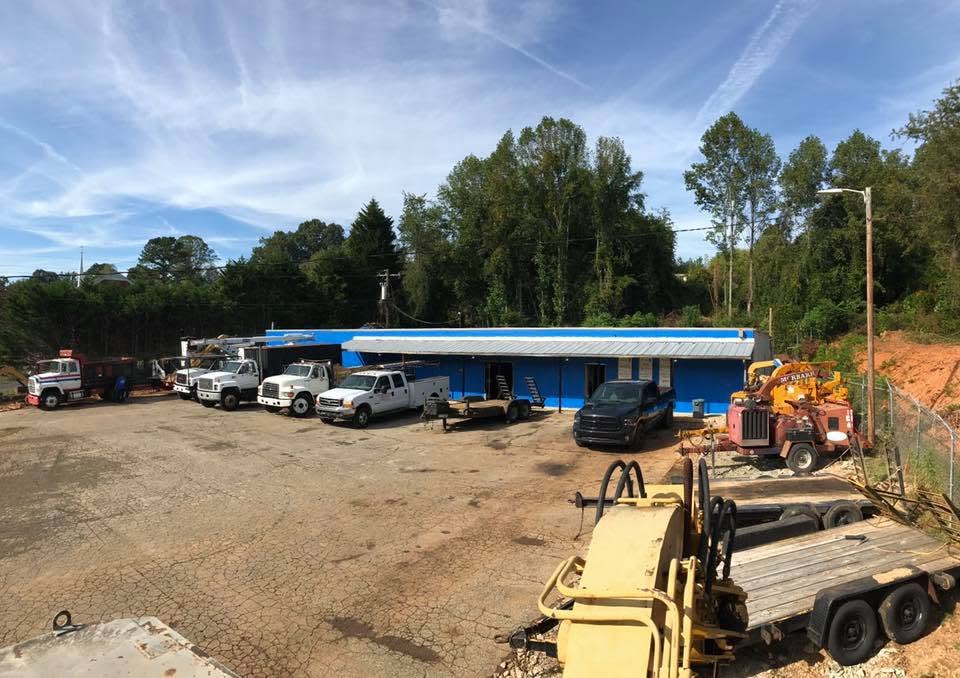
He had been talking with a retiring mechanic who owned an old fire station that had been converted into an automotive shop. The property included approximately 1.6 acres, multiple garage bays, office space, and a fenced area behind the building. It already had many of the features a contractor might need, including room for equipment and materials.
But it also needed significant work. The roof alone was estimated to cost $40,000 to $50,000 to replace, and the building had outdated electrical, heating, air conditioning, and other areas that would eventually need attention. At first glance, it might seem like an expensive property to purchase just to get a bigger yard. But there was another opportunity where instead of using the entire building for his contracting business, he could potentially convert the existing garage bays into smaller commercial rental spaces.
I have done something similar at my own property, replacing garage doors with individual entrances and windows to create storefront-style units for other businesses. The old fire station could potentially be divided into spaces for businesses such as a detailer, salon, or other small service provider, while the contractor used the office and rear yard for his own operations. That would create two benefits from the same property with a place to operate the contracting business and the opportunity to collect rent from other tenants.
How Do You Know What to Offer on Commercial Property?
One of the biggest questions during the call was how to determine a reasonable offer.
The old fire station had a county-assessed value of approximately $255,000, but that didn't mean it was worth paying that amount. The property needed substantial repairs, and those costs had to be considered before making an offer. We pulled up the county GIS records to examine the property and look at how its assessed value was divided between the land and the improvements. The land was assessed at approximately $120,000, while the building and improvements accounted for roughly $134,000. That distinction is useful because the land can still have value even when the building sitting on it needs significant work.
We discussed a potential offer around $200,000 based on the information available, while the member had originally been considering starting closer to $160,000. Neither number was a final valuation or completed offer. The point was to understand how the condition of the property affects what a buyer should be willing to pay.
If you're looking at a commercial building, you need to account for more than the purchase price. Consider the cost of replacing the roof, updating utilities, improving parking areas, meeting building requirements, and making the property suitable for your intended use. You also need to determine whether the property can produce enough value through business operations, rental income, or future resale to justify the total investment. County tax records are a useful starting point, but they're not a substitute for current comparable sales, inspections, or a professional appraisal. The deal isn't what you pay for the property. It's what you have invested in the property by the time it's ready to do what you bought it for.
You Don't Always Have to Use a Bank to Buy Commercial Real Estate
\With owner financing, the property seller agrees to finance part of the purchase instead of requiring the buyer to obtain a traditional bank loan for the entire amount. For example, on a hypothetical $200,000 purchase, a buyer might offer $100,000 upfront and negotiate payments on the remaining $100,000 directly with the seller. The payment amount, interest rate, repayment period, and any balloon payment would be negotiated between the buyer and seller. This can be an option when dealing with a property owner who is retiring, no longer needs the building, or is interested in receiving payments over time. It also creates room to negotiate terms that work for both parties.
However, owner financing doesn't eliminate the financial responsibility of buying the property. You still have to make the payments, cover the renovations, and maintain enough cash to operate your business. Any agreement should be properly documented and closed through a qualified real estate attorney, with the ownership, security interests, and payment terms clearly established. Creative financing can help make a purchase possible, but it doesn't turn an overpriced property into a good deal.
The Property Might Look Great Until You Do Your Homework
The call also included a second property that demonstrated why researching a commercial investment is so important. I have been watching an abandoned gas station that I thought could potentially be converted into rental apartments.
The building was in poor condition, but I saw an opportunity to purchase it at a discount, renovate the existing space, and create several rental units.
During this week's call, I contacted the property owner directly to discuss the possibility of purchasing it. The property had originally been listed for $450,000, and the owner was now asking $300,000. But there was a major problem - a planned widening project along that highway could affect the property's parking area and potentially make the proposed rental conversion impractical.
What initially looked like a possible renovation opportunity became a much riskier investment once the road project was considered. There were also questions about the building's condition, its former use as a gas station, and potential environmental concerns. The conversation didn't result in a purchase. Instead, it demonstrated why you need to investigate everything that could affect a commercial property's future use.
Before committing to a deal, verify zoning, building condition, environmental history, road expansion plans, access, parking requirements, and any restrictions that could interfere with your plans. Sometimes the best decision you can make on a property is deciding not to buy it.
Don't Rush Into Buying Commercial Property
Owning your own shop, yard, or office can be a major step forward for a contracting business. It can improve your operations, give your company a more established presence, and potentially create income from tenants or other uses of the property. But none of those benefits make up for buying the wrong property. Understand what your business needs, consider how much room you'll need in the future, and look for opportunities where the property can serve more than one purpose.
For blue collar business owners, the experience you already have working with land, buildings, equipment, and construction costs can give you an advantage when evaluating commercial properties. The opportunity is learning how to use that experience to purchase properties that support your business today and can continue creating value in the future.