Blue Collar Guide to Buying an Existing Business
Nov 09, 2026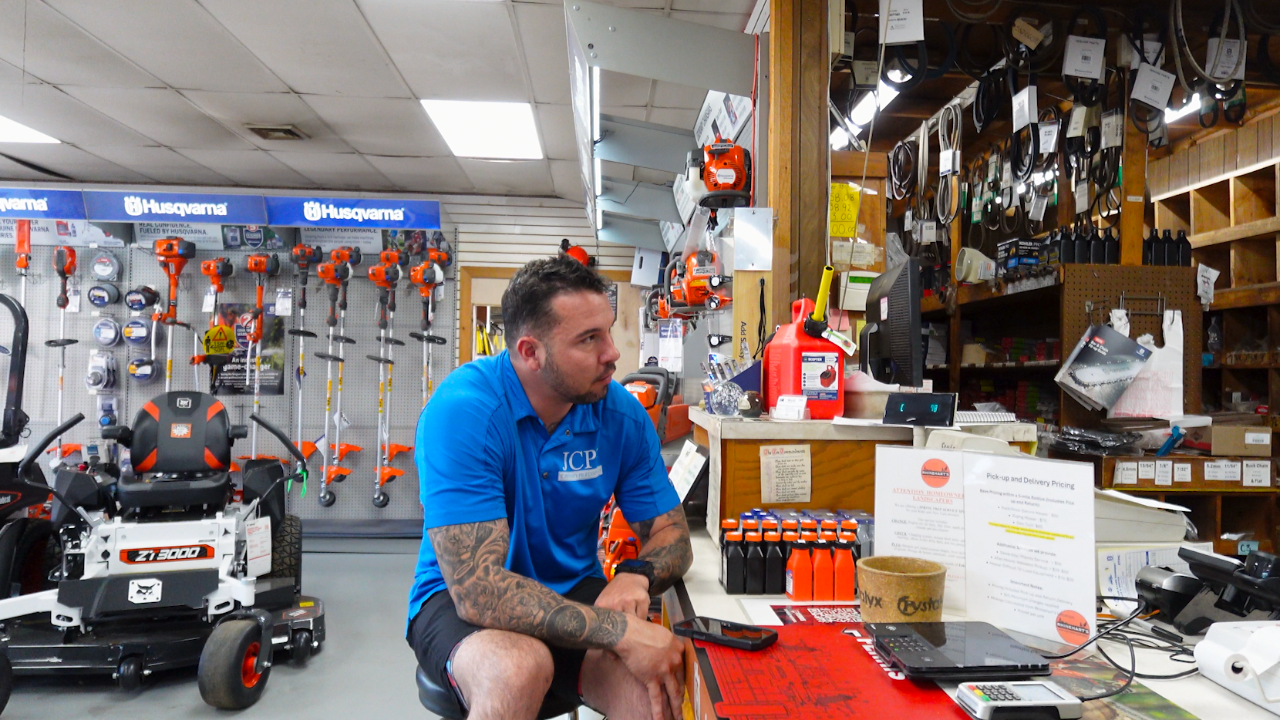
When most people think about growing their income, they think about starting another business from scratch. But what if you could skip years of building a customer base, hiring employees, establishing relationships, and figuring out how everything operates? That's one of the biggest advantages of buying an existing business instead of starting a new one.
You aren't necessarily buying a perfect operation. You might be buying a business with outdated systems, poor management, or a reputation that needs some work. But even those businesses can have tremendous value because somebody else has already spent years getting them to where they are today.
This past week inside Dirt to Dollars, we continued our Building Wealth Through Ownership series by discussing business acquisitions, how to evaluate potential opportunities, and what I've learned from purchasing and turning around Rhinehart's Saw & Lawn this year.
We also got into some of the actual numbers behind my acquisition, how I structured the purchase through owner financing, and why buying a struggling business can sometimes create more opportunity than buying one that's already running perfectly.
Why Buy an Existing Business Instead of Starting From Scratch?
One of the biggest benefits of an acquisition is that you're buying time. Think about everything that goes into starting a business. You need customers, employees, equipment, a location, vendor relationships, software, processes, and a reputation in your community. Depending on the industry, it could take years to establish all of that. When you purchase an existing business, a lot of those things may already be in place. There are two types of value you're potentially acquiring.
Tangible assets include things like:
-
Equipment and vehicles
-
Inventory and materials
-
Tools and machinery
-
Physical infrastructure
Intangible assets can be just as valuable:
-
Existing customers and recurring contracts
-
Brand recognition and reputation
-
Established phone numbers and websites
-
Trained employees
-
Vendor relationships
-
Operating processes and systems
Sometimes the most valuable thing you're buying isn't the equipment or inventory at all. It might be a phone number that's been generating leads for decades, an established customer base, or employees who already understand how to operate the business. Even a business with a bad reputation can have value. People still know where it is, what it sells, and what it does. If the problem is poor customer service, that's something a new owner may be able to fix.
An acquisition allows you to take advantage of the time and work somebody else has already invested into building a business. That's an opportunity you don't have when you're starting from zero.
Revenue Doesn't Determine What a Business Is Worth
Since we started talking about acquisitions, I've had a surprising number of business owners reach out to me about companies they're considering purchasing. And one of the first things they usually tell me is how much revenue the business generates. They'll say something like, "John, I'm looking at buying this business. It does $4 million a year." That's great, but it doesn't tell me whether it's worth buying.
A business doing $4 million in revenue could be making a tremendous amount of money, or it could be losing money every single year. Revenue tells you how much money is coming into the business. It doesn't tell you how much the owner is actually keeping. That's why you have to look beyond the top-line numbers.
When evaluating an acquisition, I want to understand the business's actual earnings, cash flow, assets, liabilities, management, and opportunities for growth. I also want to know whether its revenue is consistent, whether it relies heavily on a few customers, and how much of the operation depends on the current owner.
You can buy a business that looks extremely successful from the outside and quickly discover that there's very little profit left after expenses. On the other hand, you might find a business that isn't making much money today but has the potential to become significantly more profitable with a few changes.That's where acquisitions get interesting...
Why Is the Owner Selling?
One of the first questions I ask when evaluating a business is simple: Why does the owner want to sell?
There are plenty of legitimate reasons. Maybe they're retiring, dealing with health issues, ending a partnership, or simply ready to move on to something else. Sometimes an owner wants to free up capital for another investment. But other times, they're selling because the business is declining.
If that's the case, you need to understand what's causing the decline. Is it poor customer service? Outdated pricing? A bad location? Lost contracts? Management problems? Or is the owner simply burned out and no longer putting the same effort into the operation? Those are very different situations.
A business struggling because the owner hasn't updated pricing or invested in management could present an opportunity. A business losing customers because the market no longer needs its services is an entirely different investment. You have to understand the problem before deciding whether you're capable of fixing it.
What Happens When the Current Owner Leaves?
This is something I think a lot of people overlook. When you purchase a business, you need to understand exactly what the current owner does every day. Are they responsible for selling jobs? Do they handle estimates and pricing? Are they managing employees, maintaining customer relationships, or dealing with every problem that comes up? If so, who's going to take over those responsibilities when they're gone?
You might be buying a business that generates good money, but if the owner is personally responsible for keeping everything running, you're potentially buying yourself another full-time job. That's not necessarily a dealbreaker. But you need to understand how much time you're going to have to invest, whether you can hire someone to handle those responsibilities, and what that additional management will cost.
The existing employees can be one of the most valuable parts of an acquisition, especially when they already understand the customers, processes, and day-to-day operations. But you still need to know who's actually running the business.
How to Evaluate a Business Before Buying It
Before getting too far into a potential acquisition, you need to do your due diligence. That means getting a realistic picture of the business's finances, operations, assets, and obligations.
Some of the first documents I'd want to see include:
-
The last three years of business tax returns
-
Current profit and loss statements
-
Balance sheets
-
Recent bank statements
-
Accounts receivable and accounts payable
-
Outstanding loans and other debts
-
Equipment and inventory records
-
Existing contracts and lease agreements
You also need to investigate obligations that might not be obvious from a profit and loss statement. That could include equipment financing, unpaid taxes, vendor balances, pending lawsuits, warranty obligations, or employee-related liabilities.
Don't assume that everything you need to know will be sitting neatly in the financial statements. A lot of small business owners keep important information in their heads. You need to ask questions, verify what you're being told, and understand what you're taking responsibility for. This is also where professional legal and accounting guidance can be valuable, particularly when deciding what liabilities transfer with a purchase.
The Biggest Opportunity Is What You Can Improve
Once you understand what the business is worth today, the next question is: What value can you add after buying it?
This is where I think a lot of business owners can find opportunities. Maybe the previous owner never invested in marketing. Maybe their prices haven't kept up with rising labor, fuel, and material costs. Maybe the company has plenty of customers but doesn't have the management structure to handle the work efficiently. Or maybe there are no real systems in place. Those are all things a new owner could potentially improve.
For example, we've seen some significant pricing changes in our own construction business over the last few years. I recently had a customer reach back out about work we'd quoted three years earlier. At the time, we had quoted two RV sites for $20,000. When they came back, the price was $21,000 for just one site. That's how much our costs and pricing had changed. Now imagine buying a business that's still pricing work the way it did several years ago. There could be an opportunity to improve profitability simply by understanding the current costs of doing business and adjusting prices appropriately.
Other opportunities might involve improving company culture, replacing unreliable equipment, bringing in better management, or implementing processes that allow the business to operate more efficiently. But remember that a struggling business isn't automatically an undervalued business. You still have to determine whether the problems are fixable and whether the purchase price makes sense.
Buying Assets vs. Buying the Business
Another important part of an acquisition is understanding exactly what you're purchasing. Sometimes you're buying the ownership of an entire company. Other times, you might only be interested in certain assets, such as equipment, inventory, customer relationships, or a brand. Those can be two very different transactions.
For example, a business might have equipment and inventory that's worth purchasing, but the company itself might not be generating enough profit to justify paying much for its operations. In that situation, you may be able to structure an asset purchase instead of purchasing ownership of the entire company.
The purchase structure can also affect which liabilities and obligations you're assuming, so it's important to work through those details with the appropriate professionals. This was a major consideration when I purchased Rhinehart's Saw & Lawn. I didn't look at the business and automatically assign a large value to it just because it had been operating for decades. I looked at what it actually had, what I could do with it, and what I was willing to pay.
How I Bought Rhinehart's Saw & Lawn for $80,000
I shared the actual numbers behind my acquisition of Rhinehart's during our coaching call because I think it's a good example of how creative business acquisitions can be. When the previous owners approached me about buying the dealership, I wasn't necessarily looking to take on another business.
After years of building JC Property Professionals, I'd finally gotten to a point where I had more freedom with my time. I wasn't looking to create another responsibility for myself. But I also recognized that there could be an opportunity if I could purchase it for the right price.
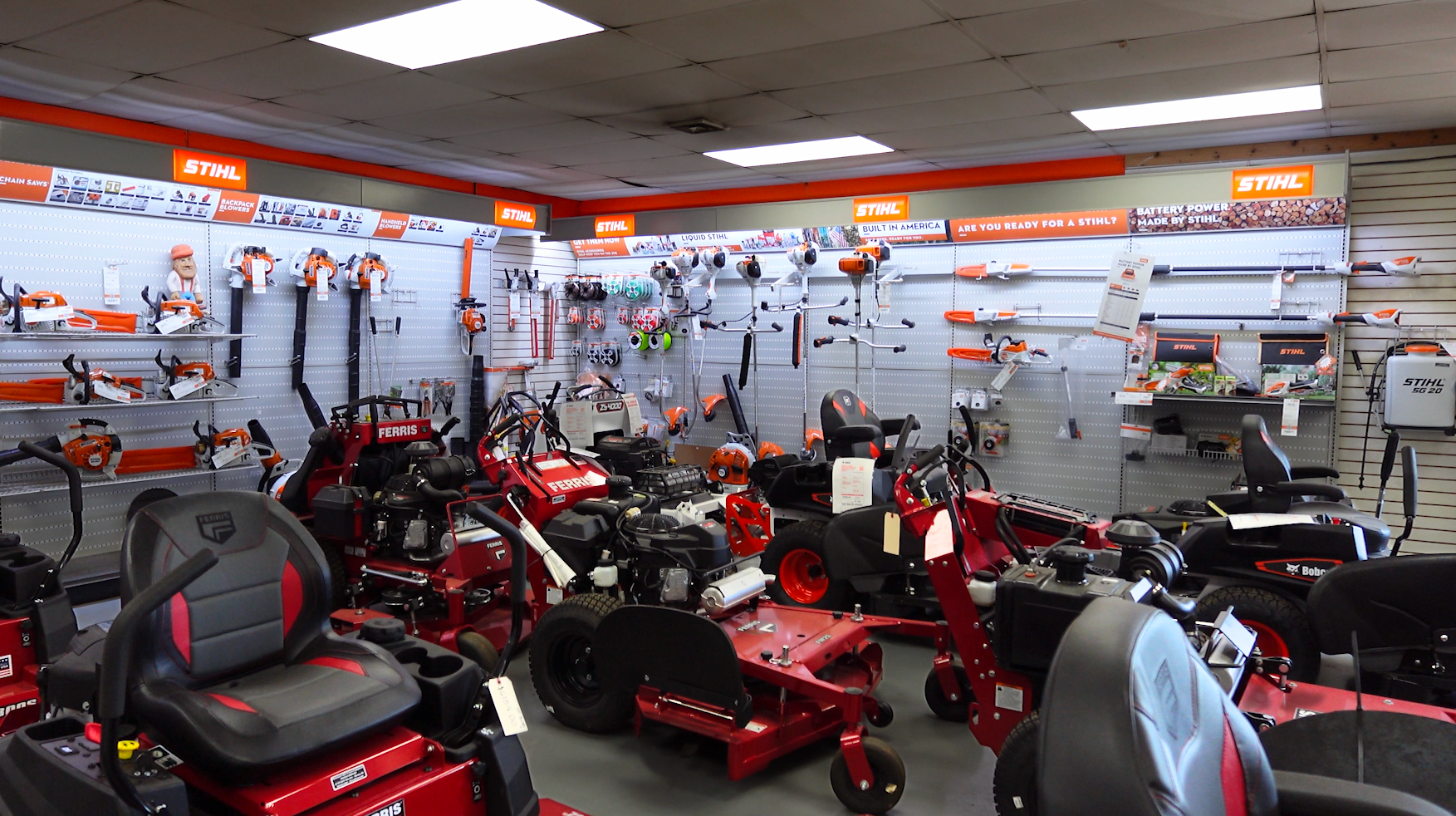
The dealership had been around for decades, so people knew where it was. It had an established customer base, existing employees, vendor relationships, and a location people were familiar with. But the reputation wasn't great, and there were a lot of operational issues that needed attention so I knew I would have to make changes.
Looking at the Actual Value
The dealership had approximately $230,000 in parts inventory. But that didn't mean the inventory was worth $230,000 to me. Some of those parts had been sitting around for years, and a portion of the inventory was obsolete or difficult to sell. Once I accounted for that, the value looked very different.
I ultimately offered $80,000 for the inventory and the business, and the sellers agreed.
But I wasn't finished negotiating, I didn't particularly want to pull $80,000 out of my other investments to purchase something that would require additional work. So I asked whether they'd consider owner financing and they were open to it. We agreed on $2,000 per month for 40 months.
That meant I could take over the business without making an $80,000 lump-sum payment upfront. The initial payment was $2,000. We negotiated the deal at a dinner table and closed roughly ten days later. The real estate wasn't included in the purchase.
Turning the Business Around
After taking over, we started making changes. We worked on the staffing, inventory, operating systems, and relationships with manufacturers and vendors. We also had to deal with inventory that had been sitting around for years. At one point, we even ran a sale where customers could fill a five-gallon bucket with old parts for $50. It helped us move inventory that otherwise might have continued taking up space.
But there was more to the turnaround than selling old parts. We had to improve the way the business operated. That required more time than I originally expected, especially during the first few months. At one point, an employee left, and I had to step back into the business to address some operational issues. Fortunately, JC Property Professionals was in a position where I could dedicate that time without neglecting my primary business and the improvements have made a significant difference. At the time of our coaching call, Rhinehart's had already more than doubled its previous best year's sales, with time still left in the year.
What Could the Business Be Worth Now?
During the call, I shared that we're considering listing Rhinehart's for approximately $400,000. That's an asking price we're considering, not a completed sale or a guaranteed valuation. Beyond the original $80,000 purchase price, I've invested roughly another $30,000 of my own money into the business.
If we can sell it at the price we're considering, there's an opportunity for a significant return in a relatively short period. And if we don't sell it, we can continue operating and improving it. That's what makes this type of investment interesting to me. We didn't have to start from scratch. We took something that already existed, identified opportunities to improve it, and built on the foundation that was there.
Owner Financing Can Open Up More Opportunities
One of the biggest lessons from the Rhinehart's acquisition is that you don't always have to purchase a business with one large payment. There are several ways to structure a deal.
Depending on what the buyer and seller agree to, an acquisition might involve owner financing, monthly payments, profit sharing, equity arrangements, or a combination of different terms. I've used owner financing on real estate deals for years, and I like the flexibility it can provide.
Sometimes a seller is interested in receiving payments over time rather than one lump sum. Other times, a buyer has the skills to improve a business but doesn't want to tie up all their available cash in the purchase. Creative financing can help both parties reach an agreement. But there's one thing I want to make clear.
Just because someone is willing to finance a business doesn't mean it's a good deal.
I used an example during the call of buying a $20,000 Honda for $200,000 simply because the seller is willing to accept monthly payments. You wouldn't suddenly consider that a smart purchase just because the financing is available. The same principle applies to buying businesses, the price still has to make sense.
Can You Buy a Business While Running Another One?
This is probably the biggest thing I want business owners to think about before getting involved in acquisitions. Buying another business can be an incredible opportunity. But it can also require a significant amount of your time, particularly during the transition. You're taking on employees, customers, payroll, vendors, systems, and a business culture that somebody else established. Even if the operation is running smoothly, you're going to need time to understand how everything works.And if it's a turnaround, you're probably going to be even more involved.
That's exactly what happened when I purchased Rhinehart's. I had to dedicate time to the dealership that I otherwise could have spent working on JC Property Professionals or doing something else. If JC Property Professionals hadn't already been operating well enough for me to step away, I could have ended up hurting both businesses.
That's why I don't think every business owner should immediately jump into acquisitions. Sometimes the best investment you can make is continuing to improve the business you already own.
If you haven't established the systems, management, and financial stability to operate without being involved in every decision, adding another company could spread you too thin. But if you've built a business that gives you the freedom and resources to pursue other opportunities, acquisitions can be a great way to expand.
Is Buying an Existing Business the Right Investment for You?
I think acquisitions can be one of the more interesting ways for blue collar business owners to build wealth. A lot of us already understand how to manage employees, work with customers, price jobs, operate equipment, and improve processes. Those skills can be extremely valuable when applied to another business. But don't get so excited about buying another business that you overlook what you've already built. You need to understand the numbers, identify where you can add value, and make sure you have the time and resources to follow through.
Buying a business can save you years of work, but the real opportunity comes from knowing what you're buying and what you can do with it afterward. That's how you turn an acquisition into something that helps you build long-term wealth instead of simply giving yourself another job.
Watch the Full Dirt to Dollars Coaching Call
The full replay of this week's call is available inside the Dirt to Dollars Operator program. Next week we continue our Building Wealth Through Ownership series by discussing how debt can be used to grow a business and build wealth, when borrowing becomes a liability, and what business owners should consider before taking on additional debt. Join us Thursday at 7 PM ET for the next live Dirt to Dollars coaching call.